

Keeping Your Dog’s and Cat’s Teeth Healthy for a Happier, Longer Life
Dental health is one of the most overlooked yet vitally important aspects of pet care. Like humans, dogs and cats can suffer from dental problems that cause pain, infection, and even affect overall health if left untreated. In fact, periodontal (gum) disease is the most common medical issue in both dogs and cats, with up to 90% of pets affected by dental disease during their lives. WSAVA
Why Dental Health Matters
It’s Common — and Often Hidden
Most pets don’t show obvious signs of discomfort until dental disease is already advanced. More than 80% of dogs and cats older than three years have periodontal disease because of plaque and tartar build up hiding quietly under the gum line. Animal Health Topics
Beyond Bad Breath
Dental issues aren’t just about stinky breath. Bacteria from the mouth can enter the bloodstream and contribute to systemic problems affecting the heart, kidneys, and liver. North Fork Veterinary Clinic
Pain and Quality of Life
Oral pain can lead to reduced appetite, difficulty eating, and behavioral/mood changes. And because pets hide pain from us so well, problems may very well go unnoticed without regular dental exams.
Most Common Dental Problems in Dogs & Cats
Periodontal Disease
This is the most common dental issue for both canine and feline (dog and cat) species. Plaque buildup leads to gum inflammation (gingivitis), then infection of the tissues supporting the teeth (periodontitis). Over time, this can cause tooth loss and bone damage. Purina Institute
Tartar and Plaque
Plaque forms quickly, and can harden into tartar if not removed. If tartar remains on the teeth it can harbor bacteria that irritate the gums and deeper structures.
Feline Tooth Resorption
Cats are especially prone to resorptive lesions — painful defects in the tooth often starting at the gum line, unique to feline dental disease. It is important to have your veterinarian do yearly oral exams on your feline friend starting when they are kittens.
Fractured or Broken Teeth
Dogs that chew hard objects may fracture teeth, exposing sensitive pulp and risking infection. Dog and Cat Dentist
Signs of Dental Disease to Watch For
Watch for any of the following — even subtle changes matter:
- Bad breath that doesn’t improve
- Red, swollen, or bleeding gums
- Yellow or brown buildup (tartar)
- Drooling or pawing at the mouth
- Difficulty chewing or dropping food
- Loose or missing teeth
- Facial swelling or nasal discharge
At-Home Dental Care: Practical Tips
Brush Regularly
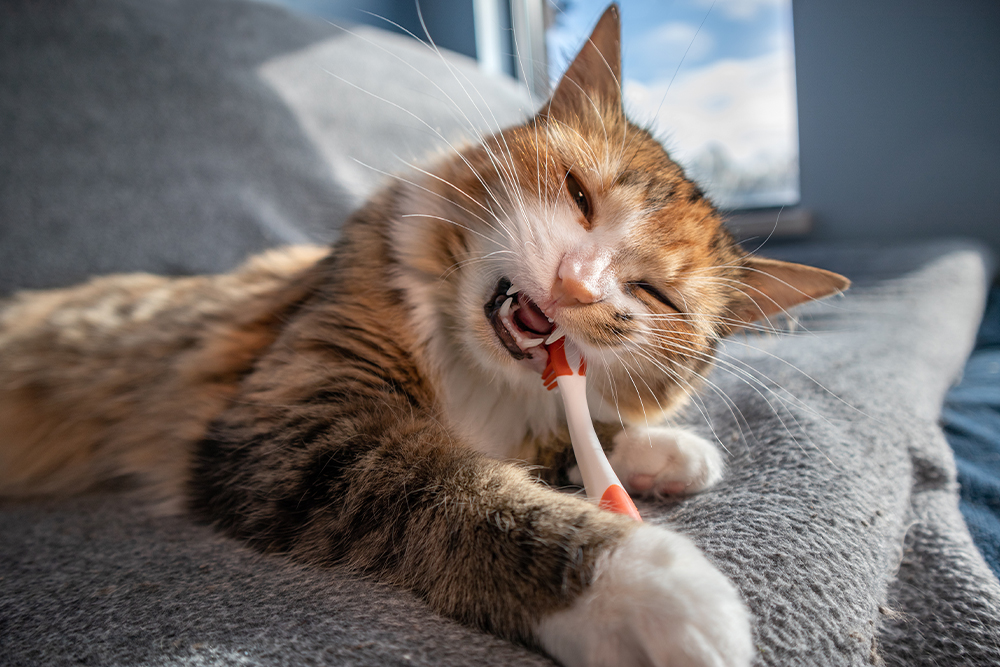
Brushing is the gold standard for reducing plaque and slowing tartar formation, just like in humans! Use pet-specific toothpaste (available on amazon) and a soft brush. For smaller breeds and cats, baby toothbrushes work very well! It is important to start slowly and build a routine that works for your dog or cat. It is also important to make this a positive experience! Most brands of pet toothpaste (such as CET Enzmatic Toothpaste) come in several flavors including beef, chicken and even seafood! Even brushing a few times a week helps if daily isn’t possible.
Dental Treats & Chews
There are several varieties of dental treats and chews on the market. At UPVC we recommend CET VeggieDent chews as the safest option, and they are available in our online store! Your pet should always be monitored closely when given any chew or treat toy to avoid a choking hazard.
Diet and Toys
Certain kibble formulas (such as Purina Pro Plan DH) and safe chew toys can promote mechanical plaque removal. Always choose pet-appropriate (and size/breed appropriate) options to avoid dental fractures and choking hazards. If you have questions or concerns about which toys and treats are appropriate for your particular pet, you can call us at UPVC and our staff would be happy to advise!
Professional Dental Care
Veterinary Dental Exam & Cleaning
Annual dental exams and professional cleanings under anesthesia allow us to thoroughly assess the teeth and clean below the gum line, where most disease develops. At UPVC we also do full mouth radiographs (X-Rays) on every dental procedure to check for bone loss/fractured teeth that we may not be visible with the naked eye.
Early Prevention
For puppies and kittens, start dental care early. This includes brushing as much as possible and being sure your pet is examined by a veterinarian starting at a young age. Many veterinarians recommend a full dental cleaning by 1 year of age for cats and small dogs, and by 2 years for larger dogs to prevent serious disease later. This is breed and patient specific, and varies from pet to pet.
Dealing with Problems
Advanced dental disease may require treatments ranging from antibiotics to tooth extractions, depending on severity. Starting dental care early significanlty reduces the risk that your pet will need tooth extractions in the future.
Final Thoughts
Dental care is an essential part of caring for your dog or cat — not just for fresh breath, but for lifelong comfort and overall health. With good at-home habits and regular veterinary checkups, you can help your furry companion enjoy better health and a happier smile.







Leave A Comment